

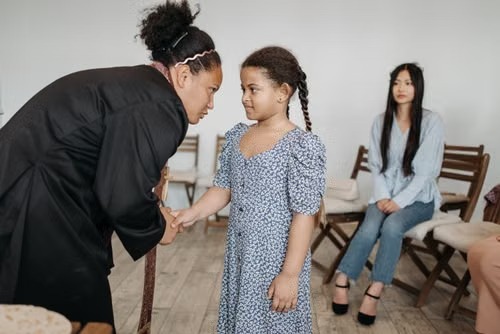
Mentoring and confidence are closely connected. Sometimes, a young person doesn’t need someone to tell them they’re capable. They need someone who believes in them long enough for them to start believing it themselves.
Confidence can be difficult to see from the outside.
A young person may look quiet in class, hesitate to join a team, avoid answering a question, or give up quickly after making a mistake. Yet behind those behaviors may be a simple fear:
“What if I’m not good enough?”
That question can shape how young people approach school, friendships, new experiences, and their future.
This is where a trusted adult can make a meaningful difference.
A supportive mentor, teacher, coach, family member, or community volunteer can help a young person recognize strengths they may not see in themselves. Through encouragement, consistency, patience, and genuine connection, that adult can help turn self-doubt into self-belief.
Confidence doesn’t usually appear because someone gives a young person one powerful speech.
It grows through experiences.
- Someone listens.
- Someone encourages them to try.
- Someone notices their effort.
- Someone reminds them that making a mistake doesn’t mean they have failed.
- Someone keeps showing up.
Over time, those experiences can change the way a young person sees themselves.
Confidence Grows Through Relationships
The confidence gap isn’t simply about whether a young person is outgoing or shy.
It can show up in many different ways.
- A student may know the answer but be afraid to raise their hand.
- A teenager may want to try out for a team but decide they aren’t talented enough.
- A young person may have an idea but assume nobody will take it seriously.
Another may avoid applying for an opportunity because they believe someone else is more qualified.
Sometimes, the problem isn’t a lack of ability.
It’s a lack of belief in that ability.
That distinction matters.
A young person can have the skills to succeed while still doubting whether they belong, whether they are capable, or whether their effort will make a difference.
A trusted adult can help close that gap by giving young people opportunities to see themselves differently.
How Mentoring and Confidence Grow Through Relationships
Confidence is often treated as something that comes from within.
This is where the connection between mentoring and confidence becomes especially important.
Research from Harvard’s Center on the Developing Child emphasizes the importance of supportive relationships with caring adults. These relationships can help young people build resilience and develop the skills needed to respond to challenges.
That doesn’t mean an adult can simply give a child confidence.
Instead, supportive adults can create experiences through which young people develop it themselves.
A mentor might encourage a young person to try something new.
Then, when the young person succeeds, the mentor can help them recognize what they did well.
If they struggle, the mentor can help them understand that difficulty is part of learning.
Eventually, the young person begins to think:
“Maybe I can do this.”
That thought can become the beginning of something much bigger.
Why One Trusted Adult Can Make a Difference
Young people interact with many adults as they grow.
Teachers.
Coaches.
Parents.
Relatives.
Counselors.
Community leaders.
Mentors.
Each relationship can contribute something different.
Yet having even one stable and supportive adult relationship can be especially valuable.
Harvard’s Center on the Developing Child identifies having at least one stable and committed relationship with a supportive adult as a common protective factor among children who develop resilience despite serious hardship.
The adult doesn’t need to be perfect.
They don’t need to have all the answers.
They simply need to be reliable, responsive, and genuinely invested in the young person’s growth.
For a child who frequently doubts themselves, knowing that someone believes in them can provide a powerful counterbalance to that self-doubt.
“I Believe in You” Is More Powerful When It Comes With Action
Telling a young person, “I believe in you,” can be meaningful.
But actions make those words believable.
- A mentor who says they will attend an important event and actually shows up sends a message.
- A mentor who remembers a young person’s goal sends another.
- A mentor who checks in after a difficult week communicates something else:
“What happens to you matters to me.”
These experiences gradually build trust.
And trust creates opportunities for honest conversations.
A young person who trusts their mentor may eventually say:
“I’m scared I’m going to fail.”
That creates an opportunity for the mentor to respond:
“It’s okay to be nervous. Let’s figure out what you can do next.”
The goal isn’t to eliminate fear.
It’s to help the young person discover that fear doesn’t have to stop them.
Small Wins Can Change How Young People See Themselves
Confidence often grows through small wins rather than dramatic breakthroughs.
Imagine a young person who doesn’t believe they are good at public speaking.
Their mentor encourages them to speak during a small group activity.
They do it.
It isn’t perfect.
But they finish.
The next time, they speak a little longer.
Eventually, they may volunteer to give a presentation.
The transformation didn’t happen overnight.
It happened through repeated experiences that challenged an old belief.
This is why mentors can help young people focus on progress rather than perfection.
Instead of saying:
“You’re naturally good at this.”
A mentor might say:
“You worked hard on that, and I can see how much you’ve improved.”
The second message teaches something important:
Ability can grow.
That belief can be much more powerful than simply being told you’re talented.
Confidence Isn’t the Same as Being Fearless
A confident young person isn’t necessarily someone who never feels nervous.
Confidence can mean trying something even when you’re nervous.
- It can mean asking for help.
- It can mean admitting that you don’t know something.
- It can mean trying again after making a mistake.
- It can mean saying, “I have an idea.”
- It can mean standing up for yourself respectfully.
- It can mean walking into an unfamiliar situation and believing you can figure it out.
A mentor can help young people understand this distinction.
They don’t have to wait until they feel completely confident.
They can act, learn, adjust, and grow.
In that sense, confidence becomes less about feeling certain and more about trusting yourself to handle what comes next.
The Role of Mentoring and Confidence in Building Self-Belief
A mentor doesn’t need to deliver motivational speeches every week.
Often, the most effective support happens through ordinary moments.
A mentor can:
- Listen without immediately judging
- Celebrate effort rather than just achievement
- Encourage young people to try new experiences
- Help them recognize their strengths
- Ask questions that encourage reflection
- Remind them of progress they’ve already made
- Normalize mistakes and setbacks
- Help them set realistic goals
- Follow up on goals and commitments
- Provide encouragement when things don’t go as planned
These actions may seem simple.
However, consistency gives them meaning.
When a young person repeatedly experiences support from the same trusted adult, encouragement becomes more than a compliment.
It becomes evidence.
- Evidence that someone sees potential in them.
- Evidence that their effort matters.
- Evidence that they are capable of growth.
What Happens When Young People Are Allowed to Fail?
One of the greatest gifts a mentor can offer is a safe place to fail.
Young people need opportunities to make mistakes without believing those mistakes define them.
A failed test doesn’t mean someone is unintelligent.
Losing a game doesn’t mean someone isn’t talented.
Being rejected doesn’t mean someone isn’t worthy.
Making a poor decision doesn’t mean someone can’t make a better one next time.
A supportive mentor can help separate the action from the identity.
Instead of:
“I’m bad at this.”
The conversation becomes:
“This didn’t work. What can we learn from it?”
That shift can be transformative.
It moves a young person from self-judgment toward problem-solving.
And problem-solving builds confidence.
Confidence Can Grow When Someone Sees Potential Before You Do
Think about the people who encouraged you when you were younger.
Perhaps there was a teacher who noticed that you were good at explaining things.
- A coach who pushed you to try something you thought you couldn’t do.
- A neighbor who encouraged your creativity.
- A mentor who told you that you had leadership potential.
Sometimes, other people see our strengths before we recognize them ourselves.
Young people are still discovering who they are.
- They may not yet know what they’re good at.
- They may not know what interests them.
- They may not know what they want their future to look like.
A mentor can help them explore those possibilities without expecting them to have everything figured out.
That freedom to explore can be incredibly valuable.
Encouragement Should Be Specific
Not all praise has the same impact.
“You did great” is positive, but it doesn’t tell a young person what they actually did well.
Specific encouragement can be more meaningful.
Instead of:
“You’re really smart.”
Try:
“You kept working on that even when it got difficult.”
Instead of:
“You’re a great leader.”
Try:
“I noticed that you made sure everyone had a chance to speak.”
Instead of:
“You’re good at sports.”
Try:
“You kept practicing that skill even after you struggled with it.”
Specific encouragement helps young people connect their actions with their strengths.
They begin to understand not only that they succeeded, but why they succeeded.
That awareness can help build a stronger and more realistic sense of self-confidence.
Confidence and Resilience Grow Together
Confidence and resilience aren’t identical, but they can reinforce each other.
A young person who believes they can learn from setbacks may be more willing to try again.
Likewise, successfully navigating challenges can strengthen their confidence.
Supportive relationships can play an important role in that process.
Harvard’s Center on the Developing Child notes that resilience develops through the interaction between supportive relationships and skill-building.
The CDC also identifies caring adults outside the family, including mentors and role models, as protective factors for young people. It notes that connecting youth with caring adults and activities can support growth, skill development, school engagement, and future outcomes.
In other words, a mentor isn’t simply helping a young person feel better about themselves.
They can also help create opportunities to practice the skills that make confidence more durable.
What a Mentor Can Say When a Young Person Doubts Themselves
Sometimes, mentors don’t need a complicated response.
A few thoughtful questions can open the door to a much deeper conversation.
Try asking:
- “What makes you think you can’t do it ?”
- “What part feels hardest right now ?”
- “Have you ever done something you thought you couldn’t do before ?”
- “What would you try if you knew you couldn’t fail ?”
- “What’s one small step you could take ?”
- “What are you proud of yourself for?”
These questions don’t tell a young person what to think.
They invite them to think for themselves.
That distinction matters because the ultimate goal isn’t dependence on the mentor.
It’s helping the young person develop confidence in their own ability to make decisions, solve problems, and navigate challenges.
Confidence Isn’t Built in a Single Conversation
One conversation can be memorable.
But confidence is usually built over time.
A mentor might have dozens of conversations with a young person.
- They might share activities.
- They might celebrate small achievements.
- They might talk after disappointments.
- They might encourage another attempt.
Some days will feel meaningful.
Others may feel completely ordinary.
That’s okay.
The power comes from the accumulation of those moments.
A young person gradually learns:
“I can talk to this person.”
Then:
“This person believes in me.”
Then:
“Maybe I should believe in myself too.”
That progression is one of the most powerful things a mentoring relationship can create.
What If a Young Person Doesn’t Respond to Encouragement?
Not every young person will immediately accept praise or encouragement.
Some may shrug.
Some may change the subject.
Others may insist that they aren’t good at something even when an adult sees clear potential.
That’s normal.
Confidence cannot be forced.
A mentor’s role isn’t to convince a young person overnight.
Instead, it is to keep creating opportunities for the young person to experience competence, connection, and progress.
Sometimes the most important response is simply patience.
- Keep listening.
- Keep encouraging.
- Keep showing up.
Eventually, the young person may begin to see what the mentor has been seeing all along.
The Long-Term Impact of Believing in Someone
The impact of mentoring isn’t always visible immediately.
A young person may not suddenly become confident after meeting a mentor.
- They may still struggle.
- They may still have difficult days.
- They may still question themselves.
But something can change underneath the surface.
They may become a little more willing to try.
- A little more comfortable asking for help.
- A little less afraid of failure.
- A little more willing to speak up.
Over time, those small changes can influence how they approach school, relationships, opportunities, and their future.
The goal isn’t to create a young person who never doubts themselves.
It’s to help them develop the belief that doubt doesn’t have to determine what they do next.
Every Young Person Deserves Someone Who Believes in Them
A young person shouldn’t have to discover their potential entirely on their own.
Sometimes, they need someone to notice it first.
- Someone who sees the effort behind the result.
- Someone who listens when they are frustrated.
- Someone who celebrates progress.
- Someone who doesn’t define them by a mistake.
- Someone who encourages them to try again.
- Someone who keeps showing up.
That is the power of a trusted adult.
At BBBSLI, mentoring relationships give young people opportunities to connect with caring adults who can encourage their growth, support their goals, and help them recognize their own potential. Learn more about BBBSLI’s mentoring programs and how meaningful relationships can create lasting opportunities for young people.
If you’ve ever wondered whether your time, attention, and encouragement could make a difference, you can also learn more about how to become a mentor.
Because confidence doesn’t always begin with a young person believing in themselves.
Sometimes, it begins with someone else saying:
“I see something in you. Let’s see where it can take you.”
And sometimes, that is enough to help a young person take the next step.